
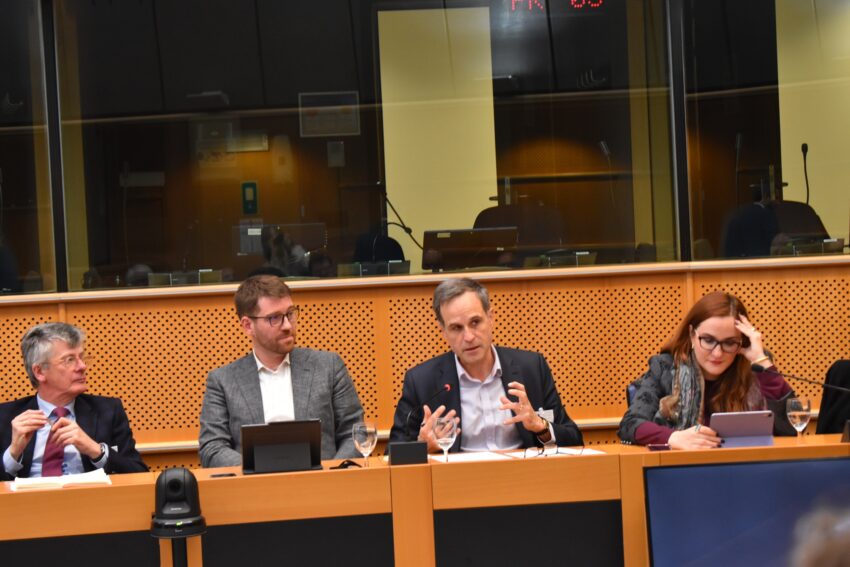
BETTER FINANCE and the CFA Institute yesterday concluded the conference “Mind the Pension Gap: Delivering Adequate, Inclusive & Portable Pensions in the Current EU Cycle”, kindly hosted by MEP Stéphanie Yon-Courtin at the European Parliament, bringing together EU policymakers, supervisors, and pension experts to address the growing challenge of ensuring decent retirement income for European citizens.
Opening remarks by Alexander Lehmann (CFA Institute) and Guillaume Prache (BETTER FINANCE), followed by keynote speeches from Stéphanie Yon-Courtin MEP and Valerie Mariatte-Wood (EIOPA), highlighted the declining adequacy of statutory pensions and the urgent need to strengthen supplementary schemes.
“Our public pension systems alone can no longer guarantee a full and decent retirement for every citizen. Making three-pillar pension systems work across the EU – including well-designed supplementary pensions – must be our first priority,” said Stéphanie Yon-Courtin MEP.
“Europe’s ageing population and shrinking workforce demand urgent action. But no reform will succeed without restoring trust in pension products. Consumers value predictability, fairness and simplicity, yet these remain elusive in many offerings. By focusing on value for money, transparency, and accessibility, we can empower Europeans to build a secure and dignified retirement,” said Valerie Mariatte-Wood (EIOPA).
In the main panel discussion, moderated by Sébastien Commain (BETTER FINANCE) and featuring Judith Arnal (CEPS/ECRI), Johan Barnard (APG), Alexander Lehmann (CFA Institute), and Tilman Lueder (European Commission), speakers identified three central priorities.
Adequacy: Better returns and stronger consumer protections
Panellists agreed that supplementary pensions must deliver real, long-term value to compensate for shrinking first-pillar benefits. High fees, low returns, and insufficient portability remain key obstacles. All speakers stressed that pension assets must be invested in the best interests of savers.
Mobilising Europe’s savings without exposing citizens to undue risk
Europeans save heavily but invest little for retirement. Experts called for simpler, safer long-term products that enable households to participate in capital markets, emphasizing performance, neutrality, and diversification.
Inclusiveness: Ensuring access for all workers
Large groups – such as low-income earners, women, mobile workers, and those in non-standard employment – still lack access to occupational or personal pensions. Panellists pointed to automatic enrolment, lower-cost and simpler personal pension products, and improvements to the PEPP as avenues to expand coverage. Lessons from the Dutch quasi-mandatory system highlighted the importance of trust, transparency, and clear governance.
“We should not view supplementary pensions as a silver bullet. Building long-term savings habits and financial literacy takes time, and products must be simple, predictable, accessible, and provide clear liquidity options for savers,” said Alexander Lehmann (CFA Institute).
“Europe needs stronger supplementary pensions, but we still face major barriers: low coverage, low contributions, high costs, market risks, and fragmented systems. The Commission’s recent proposals are a step forward, yet developing effective supplementary pensions remains a Member State responsibility. Successful models in Denmark, Sweden, and the Netherlands show that auto-enrolment or quasi-mandatory occupational schemes, supported by social partners, can significantly improve outcomes,” said Judith Arnal (CEPS/ECRI).
“The Dutch experience shows that strong occupational pensions rely on long-term cooperation between social partners. Stability, scale, and clear governance are essential to ensure good outcomes, and pension systems must be protected from short-term political cycles,” said Johan Barnard (APG).
“The prudent person principle gives pension trustees freedom to diversify and invest professionally, but it also demands accountability. Well-governed schemes with diversified portfolios deliver better long-term returns and, at scale, support both savers and Europe’s capital markets,” said Tilman Lueder (European Commission).
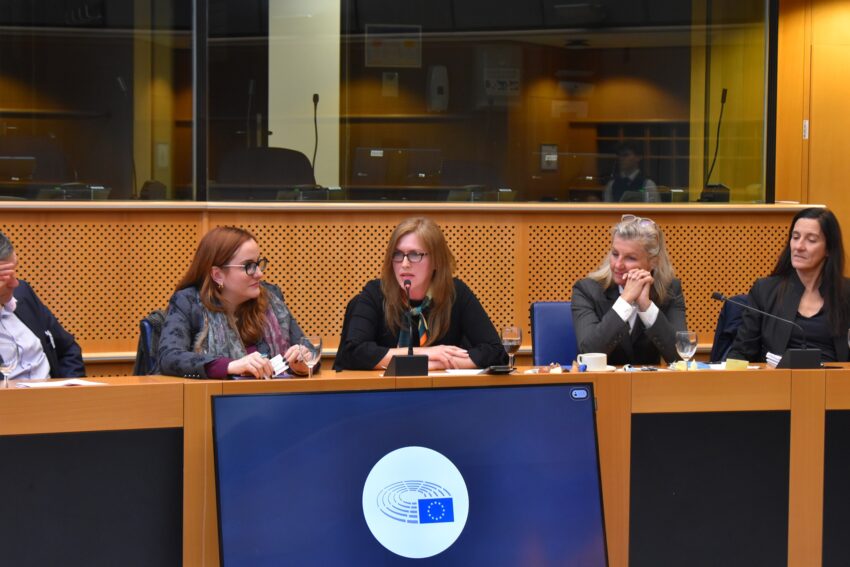
Closing the event, Aleksandra Mączyńska, Managing Director of BETTER FINANCE, underlined the need for coordinated EU and national reforms to make supplementary pensions both adequate and accessible to all citizens.
“Europeans urgently need simple, good-quality, and cost-efficient pension products. Too many existing options are costly and deliver poor returns — BETTER FINANCE’s annual research1 shows this clearly. The Commission’s pension package offers a solid foundation, but Member States must be bold and adopt pro-consumer solutions, such as auto-enrolment in well-performing products, and ensure a level playing field for PEPP to give it a real chance to succeed,” said Aleksandra Mączyńska (BETTER FINANCE).
** Download the press release below **